Youngsang's Portfolio

I am a civil servant for the Republic of Korea government, where I work for the Ministry of National Defense. I am also a Non-resident Fellow at the New Lines Institute for Strategy and Policy in Washington D.C. I hold a Master of Urban Spatial Analytics degree from the University of Pennsylvania. My research focuses on applying and integrating geospatial information in the defense sector. I am also interested in street address systems, geocoding, and wayfinding that utilize mobile maps.
Geospatial Communication
Geospatial information is a powerful tool for communicating through storytelling. The following examples, including 30 Day Map Challenge—daily social mapping project happening every November—show my communication skills using geospatial data that is both accessible and reproducible. Professional memorandum writing samples in transportation are provided below as well.
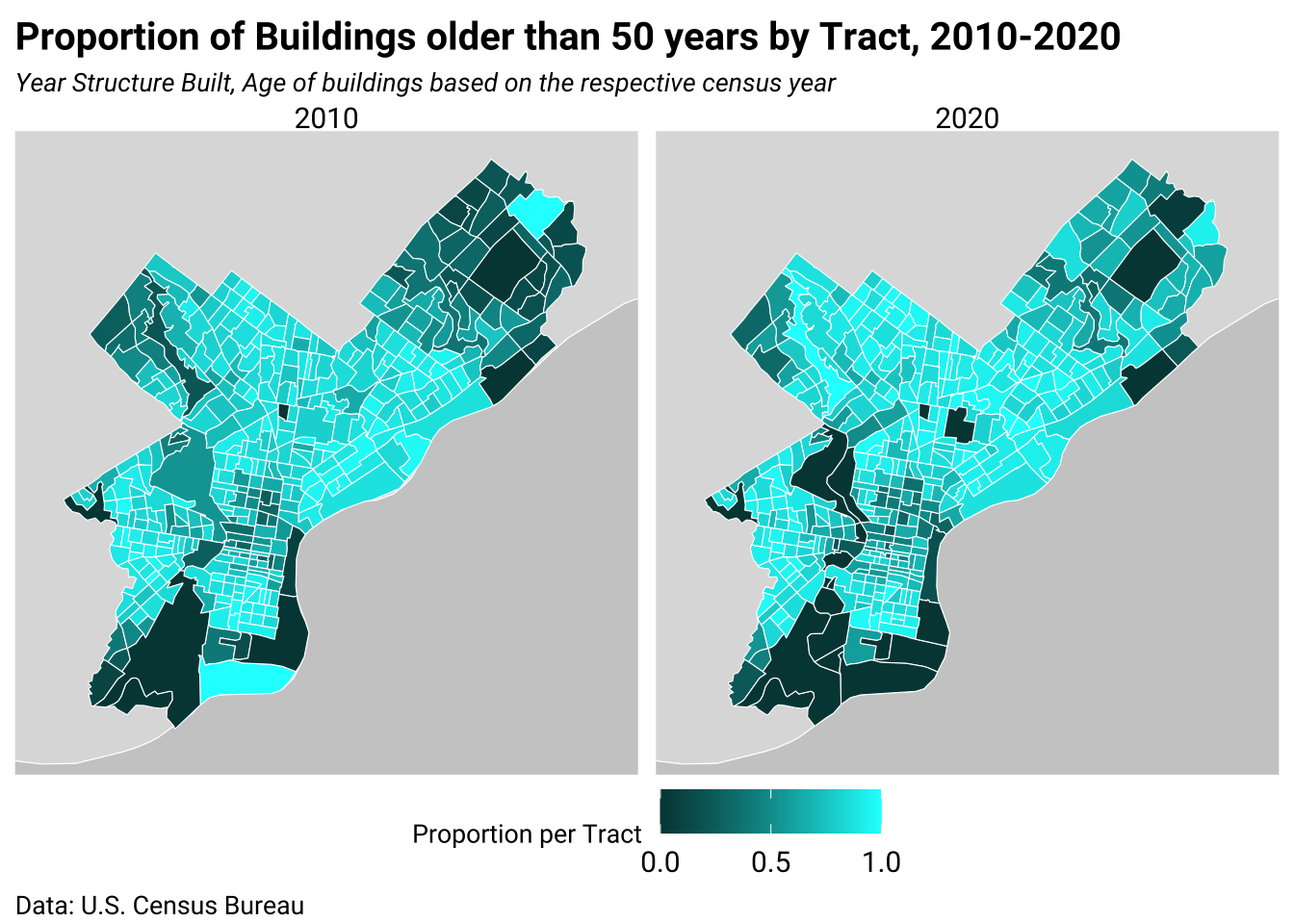
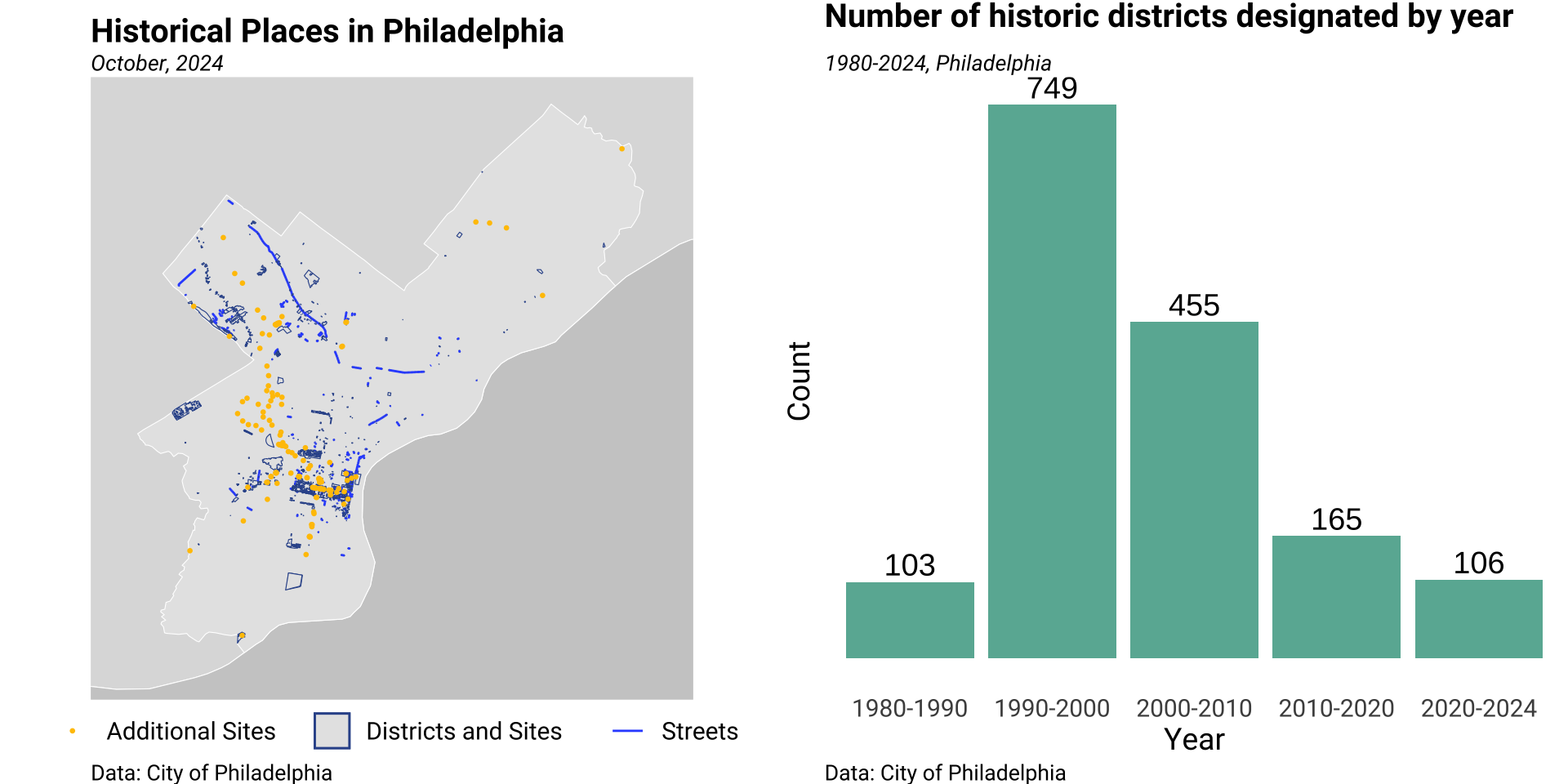
To Preserve and Well-manage Old Buildings in Philadelphia
November 19, 2024
Instructor: Prof. Delmelle, Elizabeth
What would it feel like if my parents or grandparents’ generations lived in the same building I live in 30 or 50 years ago? As a Korean student studying abroad, I am not used to that feeling because there are a lot of new cities and new buildings in Korea, but it is very common for the residents of Philadelphia. Philadelphia’s rich history is embedded in its streets, buildings, and neighborhoods. This is confirmed by data and maps.
Click here to see the full story.
30 Day Map Challenge
November 1-30, 2024
Instructor: Prof. Delmelle, Elizabeth
Day 1 Points: Night of Savannah
The map denotes 19,024 street lights’ location in the City of Savannah which Georgia Power owned.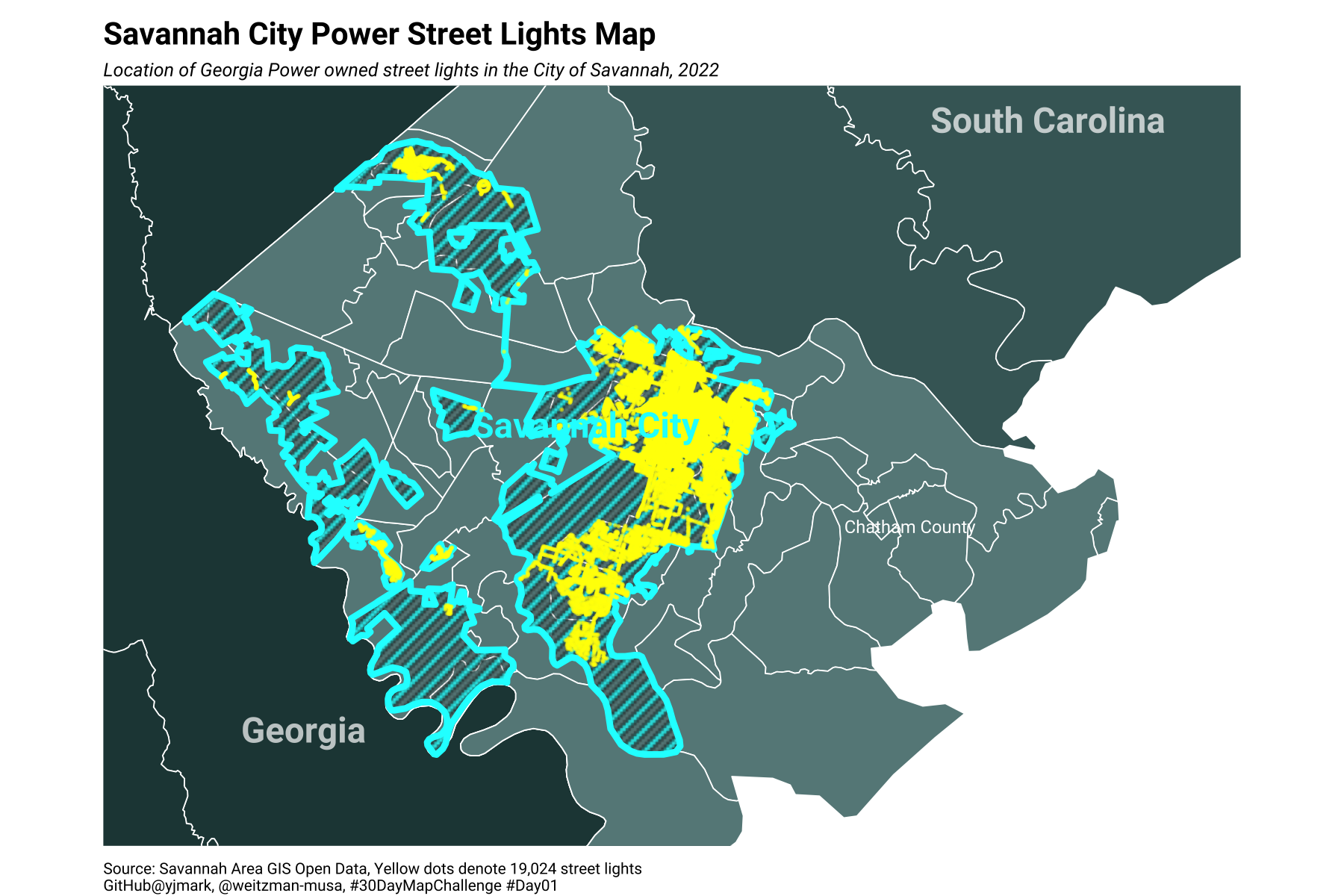
Day 5 Journey: The Path of a U.S. Army Career
How many times does a U.S. Army service member relocate? On average, they are estimated to relocate 10-12 times during a 20-year career. Here is a map showing the major milestones of an example career path by location. 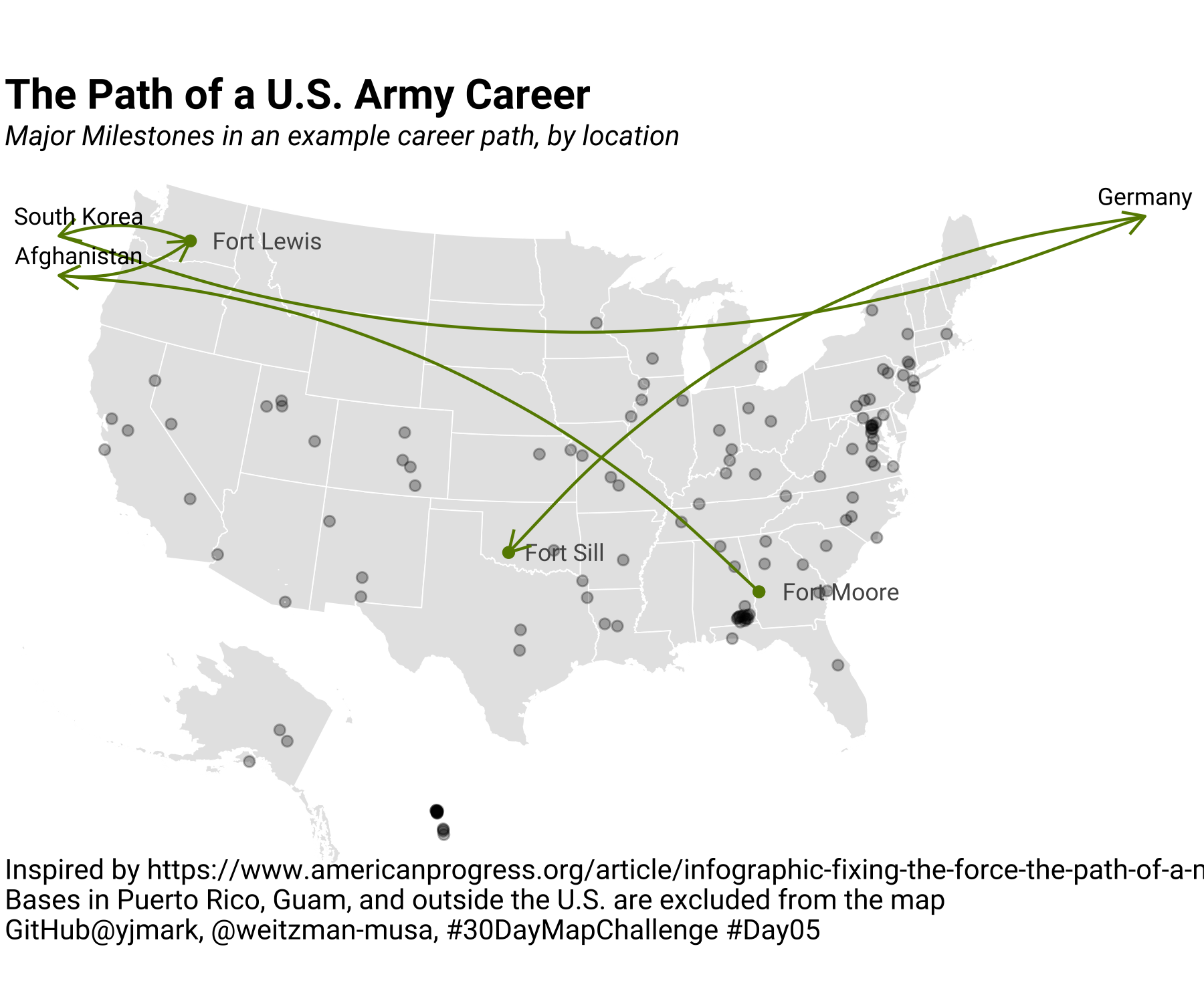
Day 10 Pen and Paper: My Childhood Map (Bupyeong-gu, Incheon, Korea)
This paper-and-pen map shows the neighborhood around Buyeong-ro in Bupyeong-gu, Incheon, where I lived during my childhood. The places I remember most are those where spent time with my beloved family and friends, such as playgrounds, schools, and my friends’ houses, especially the trampoline in front of the cathedral.
Day 12 Time and Space: The Beginning of Roman Catholicism in Korea
In the 17th century, Catholicism was introduced to Korea by envoys traveling to and from Beijing, China. Initially, it was regarded as a new field of study rather than a religion and was referred to as “Western Learning (Seohak)”. It is unprecedented worldwide that Catholic faith was grown by Koreans themselves before the arrival of Western missionaries. 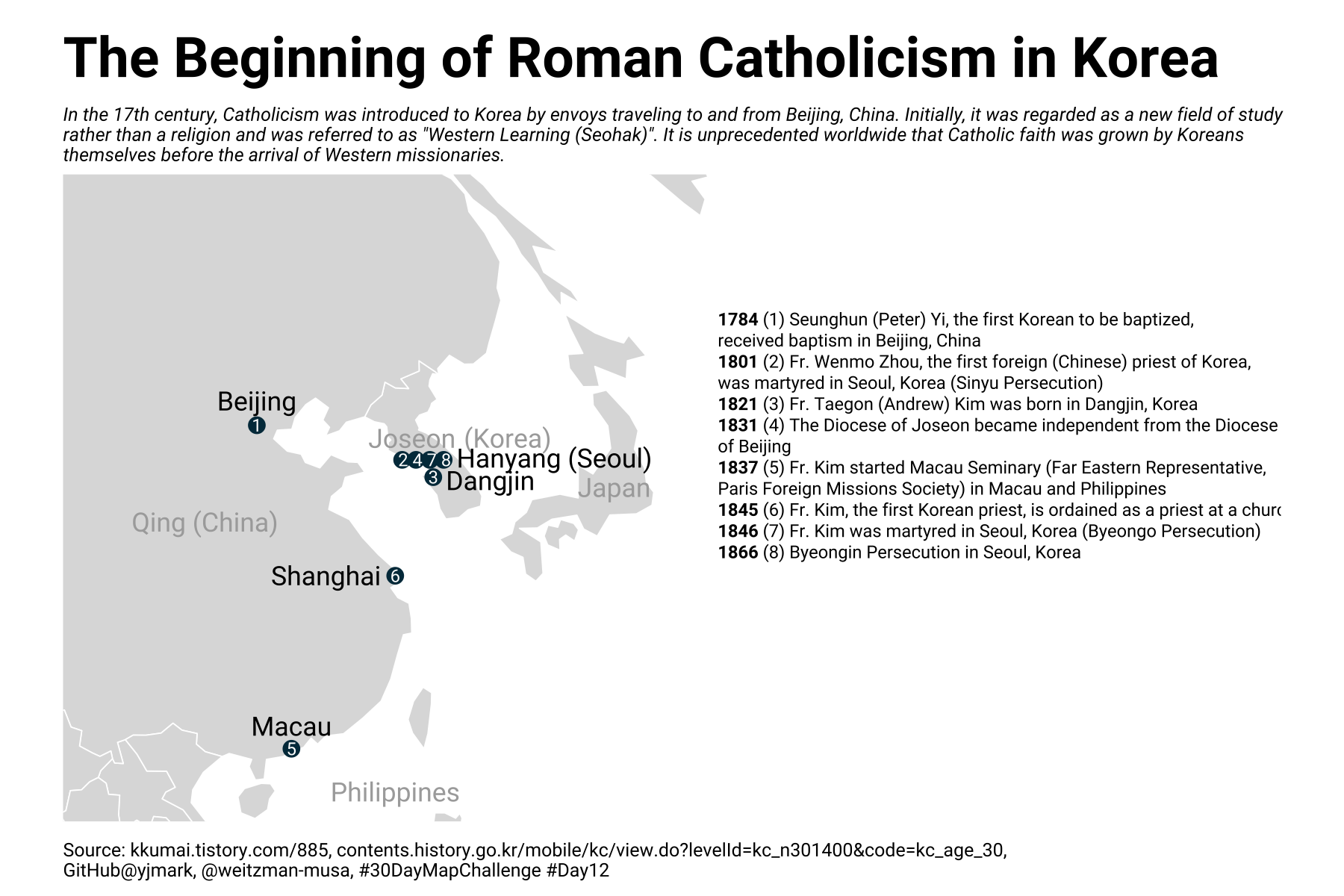
Day 14 A World Map: Do All Countries Use Street Addresses?
Not all countries use street names in their addressing systems. Some countries have street names for every road and use them in addresses, while others have few or no street names and rely instead on such as area codes, PO box numbers, or digital geocoding services like what3words.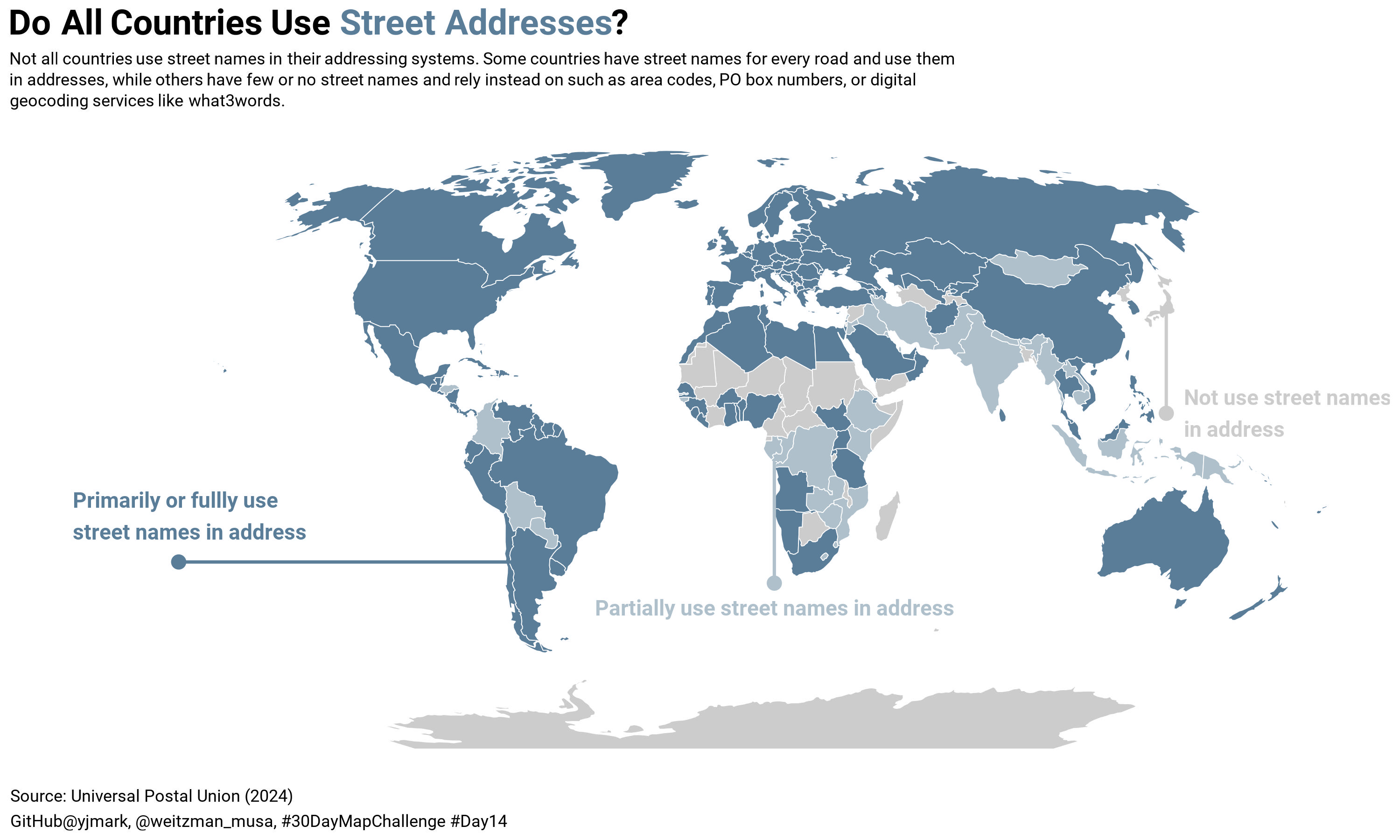
Day 16 Choropleth: Median Household Income and Travel Time to Work Pattern in Three Eastern Cities
How is the relationship between commute time and household income distributed spatially? Today’s map examines cases in Philadelphia, Washington D.C., and Boston. 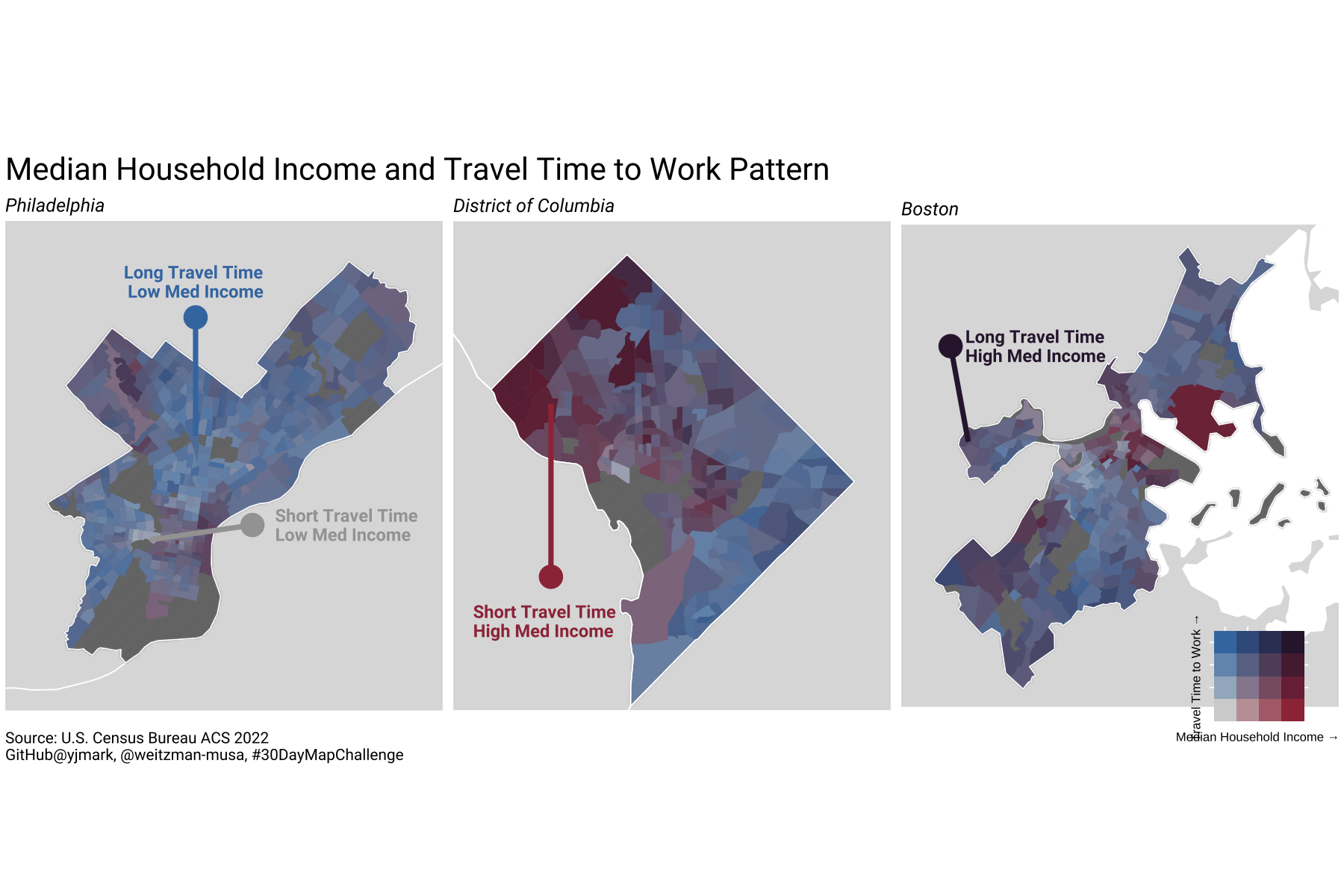
Day 20 Openstreetmap: Exploring Historic Sites in Philadelphia with OpenStreetMap
Today’s map shows the locations of Philadelphia’s historic sites visualized on OpenStreetMap. Today, all properties of historical places in Philadelphia is managed by the City of Philadelphia, by undergoing a nomination process and being added to the register.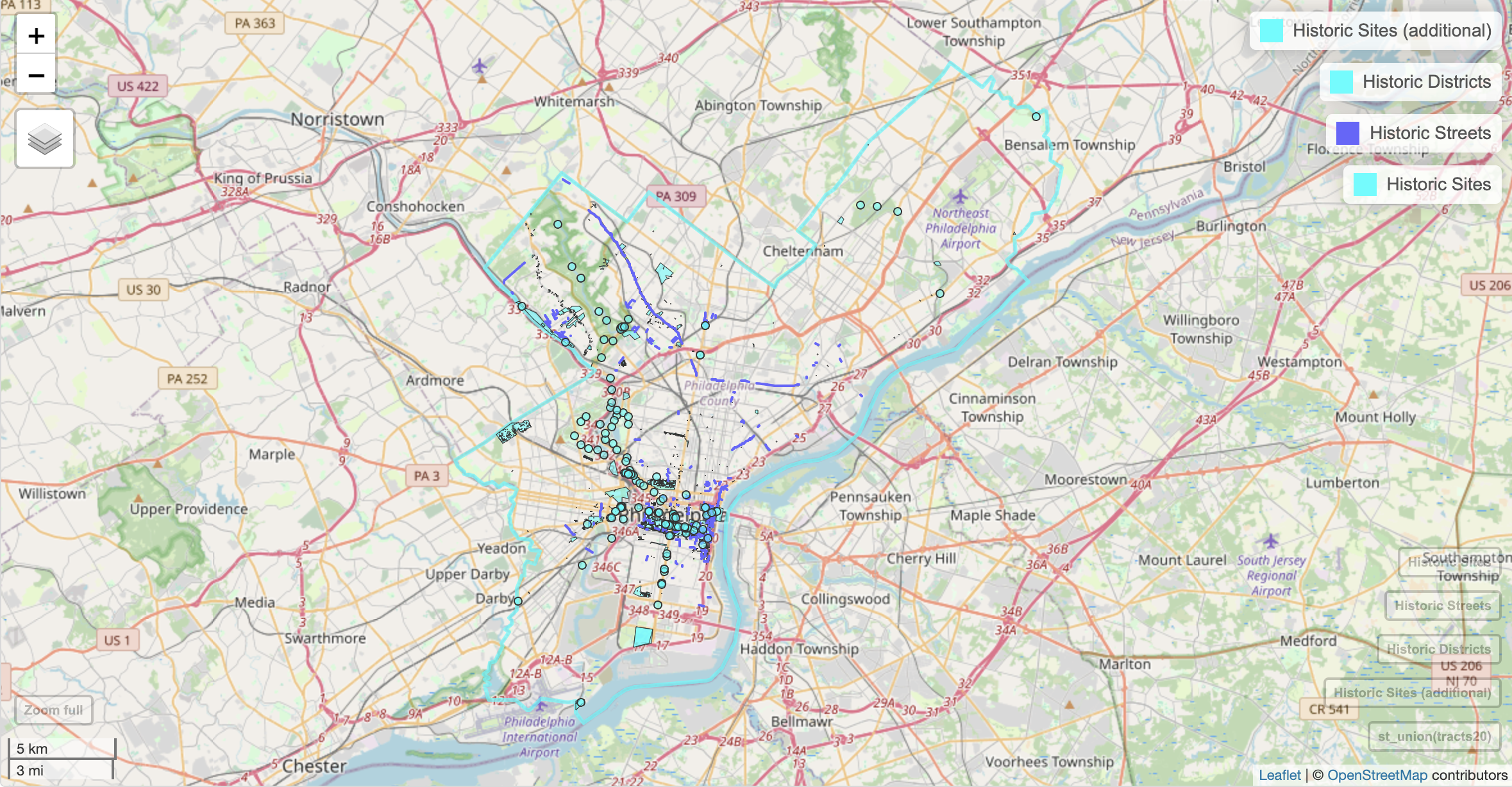
Day 22 Two Colors: Veteran Population Share in U.S. Cities
Where in each city do veterans tend to live in larger numbers? Cities in green have a veteran percentage above the median (6.9%) of the age 18+ population, while cities in dark gray fall below the median.
Day 24 Only Circular: Fare Recovery Ratio of U.S. Transit Agencies in 2009-2019
The Fare Recovery Ratio (FRR) is a measure of the extent to which a transit agency’s operating expenses are covered by passenger fares. The high FRR (close to 1) means that the agency is efficient of revenue generation from fares compared to the total operating costs of the transit services. 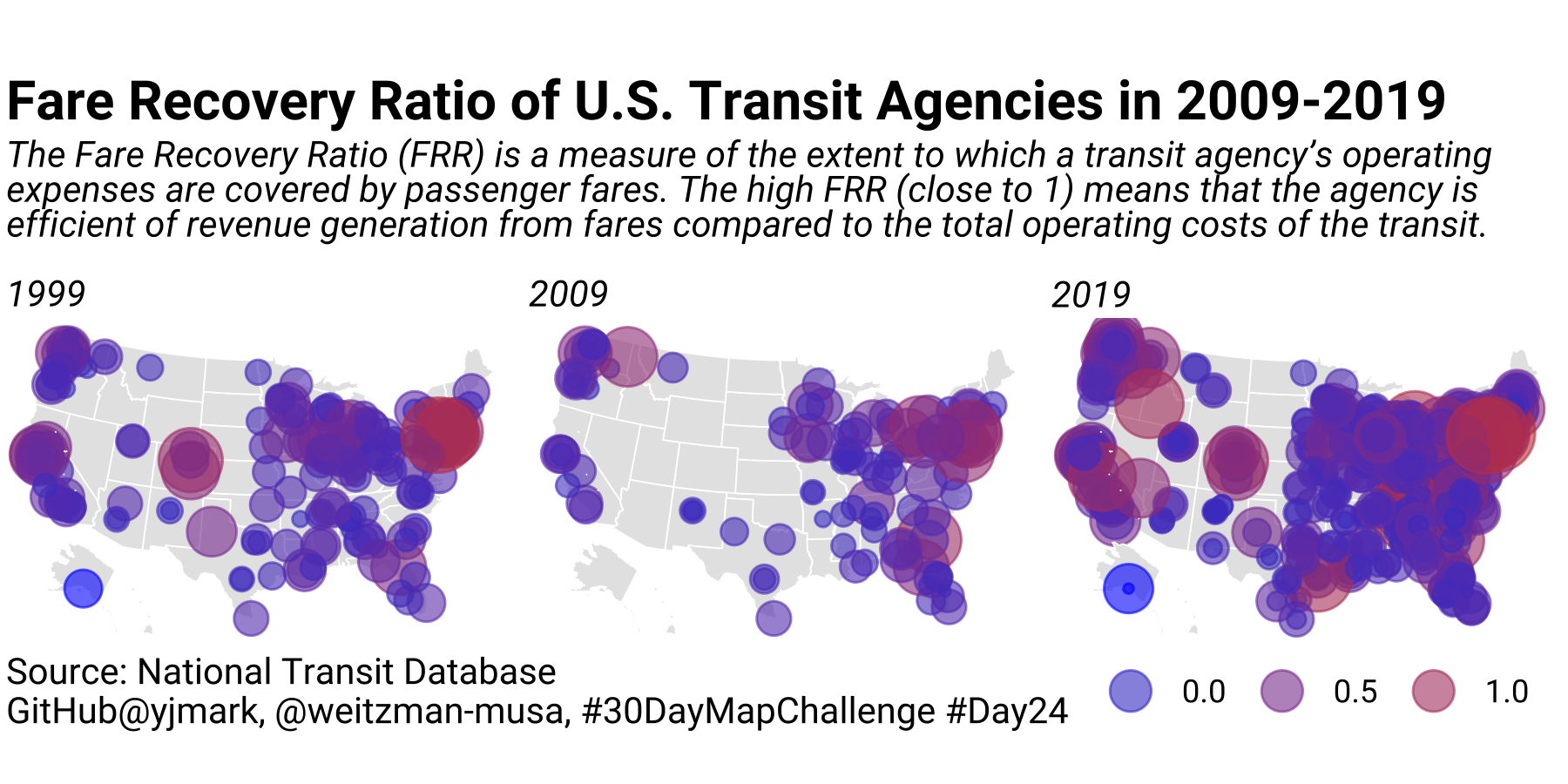
Day 25 Heat: Philadelphia 2024 Crime Incidents Heat Map
What are the most dangerous neighborhoods in Philadelphia? A heat map displaying the number of incidents in 2024—categorized by drug offenses, burglaries, and thefts—is shown with police district boundaries and station locations. 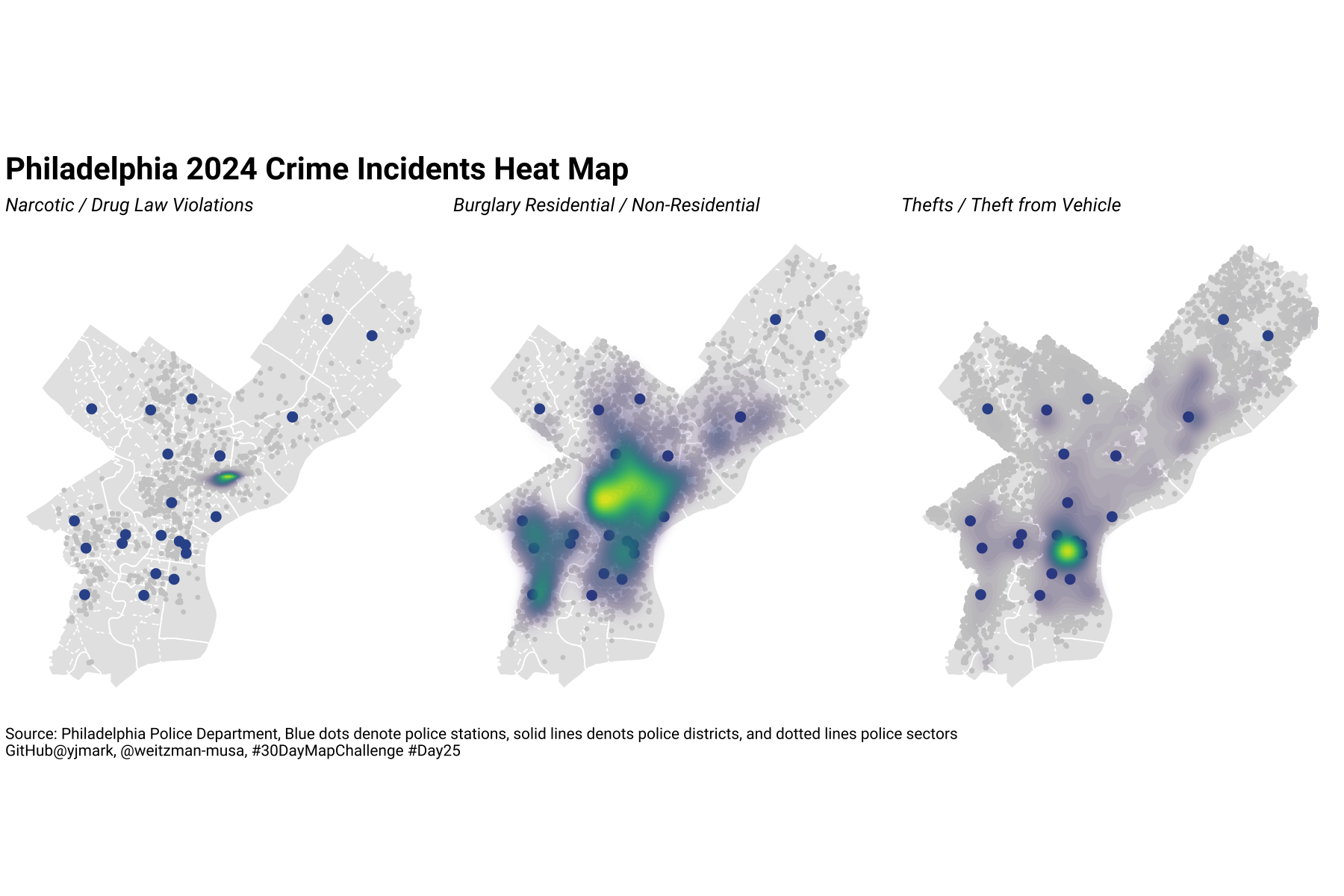
Transportation Memorandum Writing Samples
(Multimodal Transport) Recommendation of Congestion Charging in Western Zone in London
February 14, 2025
Instructor: Prof. Guerra, Erick
This memorandum recommends a careful approach to extending westward congestion charging from Central London, considering the following: First, given the high proportion of residents in western zone, explore ways to integrate the congestion charging policy with existing systems so that it does not feel like an additional regulatory burden to people. Second, introduce a two-zone system to effectively reduce traffic volume, but establish clear criteria to avoid confusion. Third, central and western zones have different key industries, which should be considered when implementing congestion charging.
(Multimodal Transport) Recommendations for Improving California High-speed Rail Project
April 8, 2025
Instructor: Prof. Guerra, Erick
This memorandum recommends alternatives for three persistent challenges facing the California High-Speed Rail (CAHSR) project. First, to address delays in rights-of-way acquisition, particularly interfering with public utilities, the Authority is recommended to strengthen cooperation with relevant agencies and pursue legislative solutions to expedite processes. Second, to build public trust, the Authority should conduct a transparent route decision process, including public hearings and sharing international case studies. Lastly, to induce long-term ridership, the Authority is recommended to integrate seamlessly with local transit systems through coordinated fare structures, including partnerships with ride-share and micromobility companies to enhance first- and last-mile connectivity.
(Introduction of the Transportation Planning) Four Memorandum of Transportation Planning in U.S.
December 12, 2024
Instructor: Prof. Guerra, Erick
-
Recommendation of Transit-Oriented Development Plan for the City of Philadelphia
-
Review of the Proposed Minimum Parking Requirements for New Multifamily Housing Developments
-
Recommendation of Philadelphia City Cycle Strategy
-
Recommendation of Purchasing Cars Subsidy Policy for Low-income Households
Page template forked from evanca